Germany's Oil Purchases from Russia: A Closer Look at the Energy Deal
Germany’s reliance on Russian oil has been a contentious issue for years, with the country importing significant volumes of crude from Moscow despite sanctions and geopolitical tensions. The relationship, shaped by historical ties and economic necessity, raises questions about energy security, economic leverage, and the long-term sustainability of such a dependency.
Why Does Germany Still Buy Oil from Russia?
Despite the sanctions imposed after Russia’s invasion of Ukraine, Germany has continued to purchase oil from Russia, primarily through third-party intermediaries. The country’s energy needs, combined with the lack of alternative suppliers, have kept the trade flowing. Some analysts argue that Germany’s purchases are a calculated move to maintain economic stability, while others see it as a missed opportunity to reduce reliance on a politically volatile partner.
Germany imports around 1.5 million barrels per day of Russian oil, making it one of the top buyers. The country has also sought to diversify its energy sources, investing in renewable projects and liquefied natural gas (LNG) imports. However, these efforts have been slow, leaving Germany vulnerable to supply disruptions from Russia.
What Are the Risks of This Dependency?
The biggest risk is political instability. If Russia were to cut off oil supplies, Germany would face severe economic consequences, including higher energy prices and potential industrial disruptions. The country has already experienced supply chain issues due to the Ukraine war, making it more dependent on Russian oil.
Additionally, Germany’s purchases could be seen as supporting Russia’s war effort, a concern that has fueled criticism from allies and energy transition advocates. The European Union has imposed sanctions on Russian oil, but Germany has managed to bypass them through indirect purchases.
What Could Change Germany’s Approach?
Germany’s energy strategy is evolving, with a focus on reducing reliance on fossil fuels. The country has set a goal to phase out Russian oil by 2025, though this timeline may be unrealistic given current supply chain constraints. In the meantime, Germany is exploring alternatives, such as importing LNG from the U.S. and investing in offshore wind farms.
However, transitioning away from Russian oil is not straightforward. Germany’s industrial sector, particularly its steel and chemical industries, still depends heavily on Russian crude. Until these sectors can fully decarbonize, Germany may remain tied to Russian oil for the foreseeable future.
Conclusion: A Balancing Act
Germany’s purchases of Russian oil represent a complex balancing act between economic necessity and geopolitical risks. While the country has made progress in diversifying its energy sources, the transition is far from complete. As long as Germany remains dependent on Russian oil, it will face challenges in both energy security and political relations. The coming years will likely bring further shifts in this delicate energy equation.
Mapa De América Para Imprimir | Político | Físico | Nombres | Mudo 🥇
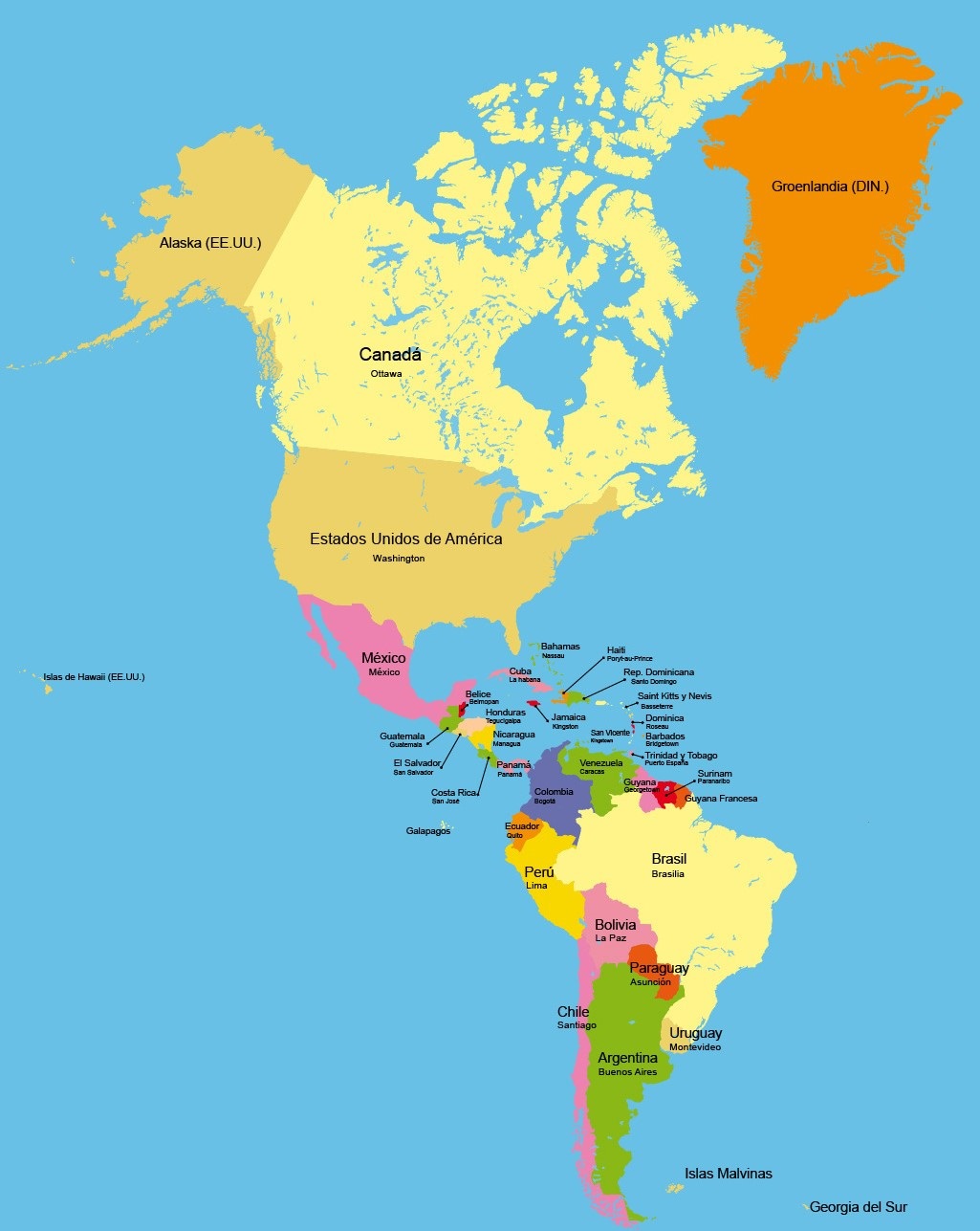
Mapa de América para imprimir | Político | Físico | Nombres | Mudo 🥇